
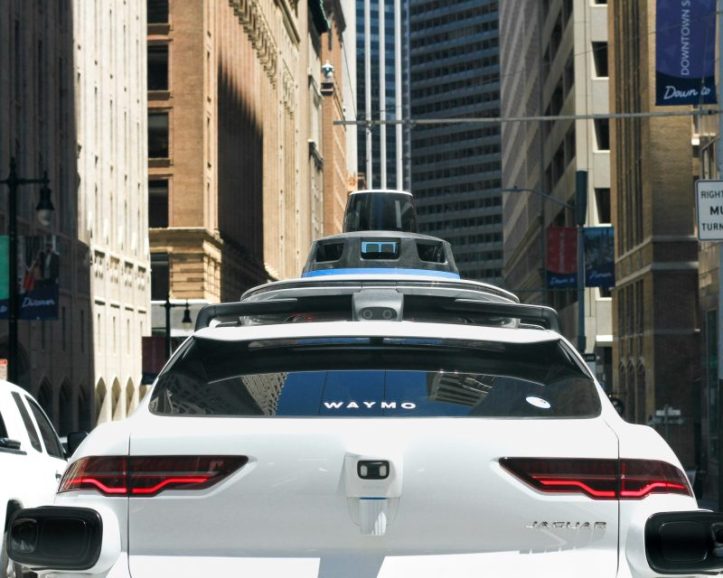
Waymo Robotaxi Involved in Dallas Pedestrian Fatality — Why “Not at Fault” Doesn’t End the Legal Questions
A fatal crash in Dallas has put driverless cars back in the headlines, and this time the vehicle at the center of it was a Waymo. Early reports from police and the company suggest the robotaxi was not at fault. But for anyone hurt in a collision involving an autonomous vehicle in Texas, “not at fault” is where the legal questions begin, not where they end.
Here’s what happened, what the evidence shows so far, and what it means for pedestrians, drivers, and passengers sharing Texas roads with a rapidly growing fleet of self-driving cars.
What Happened on Maple Avenue
According to details reported by Forbes transportation contributor Brad Templeton, a pedestrian was crossing Maple Avenue in Dallas away from a crosswalk when he was struck from behind by an SUV traveling roughly 35 mph in a 30 mph zone. The impact threw his body more than 30 feet into the oncoming lane.
That oncoming lane was occupied by an unoccupied Waymo Jaguar I-Pace. The robotaxi was traveling about 24 mph and, according to Waymo, detected the pedestrian entering the roadway from the far side when it was still around 150 feet away. The car began slowing in anticipation, and by the time the pedestrian was flung into its path, it had reduced its speed to about 5 mph. The Waymo made contact with him and stopped immediately. Both the Waymo and the SUV remained at the scene. The pedestrian was treated by bystanders and emergency crews but later died at the hospital.
Police have stated that no party was at fault in the crash.
Why the Robotaxi Was Likely Not the Cause of Death
Two facts point away from the Waymo as the source of the fatal injuries.
First, the physics. A pedestrian thrown more than 30 feet by a vehicle moving at 35 mph absorbed an enormous amount of force from that first impact. A secondary, side-on contact with a vehicle that had already braked to 5 mph is unlikely to have caused the fatal trauma — and almost certainly wasn’t the primary cause.
Second, the timing. The Waymo saw a potential hazard and slowed before the pedestrian ever entered its lane. It didn’t speed into a person; it was already braking when an unforeseeable event pushed a body into its path. Under ordinary traffic law, a driver — human or robotic — who is traveling at a lawful speed and reacting reasonably to a sudden, unavoidable event is generally not liable.
This is Waymo’s third “involved” fatality. Safety researchers usually count involvement rather than fault, because being present in a crash chain is not the same as causing it — a distinction that matters enormously when the question turns to liability.
The Shadow of the Cruise Incident
Any robotaxi fatality inevitably draws comparison to the 2023 incident that ended GM’s Cruise robotaxi program. In that San Francisco crash, a pedestrian was also struck by a human driver and thrown into a Cruise vehicle’s path. Cruise was not at fault for the initial impact either.
What sank the company was what happened next. The Cruise vehicle attempted a pullover maneuver while the pedestrian was still underneath it, dragging her roughly 20 feet, and the company then withheld that footage from regulators. The California DMV suspended its permits, and the company ultimately shut down — not because of the crash, but because of the conduct and communications that followed.
So far, the Dallas situation looks different. Waymo appears to have been transparent and cooperative, and there’s no indication it did anything wrong on the road or in its reporting. Transparency after a crash is often what separates a defensible incident from a catastrophic one.
Could a “Superhuman” Car Have Done More?
It’s worth asking whether a vehicle with superhuman sensors and computation could have prevented the collision even when a human couldn’t. In theory, a car with a strong physics model might have calculated that continuing — rather than braking — would carry it past the point of impact before the pedestrian arrived. In practice, that kind of split-second, high-confidence prediction is extraordinarily hard, especially at night, and speeding up is a risky bet that could just as easily make things worse. There was also traffic in the adjacent lane, so swerving wasn’t an option.
The realistic conclusion is that there was little the Waymo could have reliably done to avoid contact once the pedestrian was thrown into its lane. Notably, Waymo’s own 2021 simulation study found its system could avoid or mitigate a large share of crashes even when it was the car being hit — a genuinely meaningful safety benefit — but no system can rewrite physics when a person is launched into its path with almost no warning.
What This Means Under Texas Law
Here’s where the reporting ends and the legal reality begins.
In Texas, a pedestrian crossing outside of a marked or unmarked crosswalk generally must yield the right-of-way to vehicles on the roadway, under Texas Transportation Code § 552.005. At the same time, drivers still owe a duty of “due care” to avoid hitting pedestrians whenever possible. That combination is why fault in these cases is rarely as simple as a single police statement.
When a self-driving car is part of the crash chain, the questions multiply:
- Who is the “driver” of an unoccupied robotaxi? Liability may shift toward the company operating the vehicle, its software, or its fleet partner rather than a person behind the wheel.
- What does the vehicle’s own data show? Robotaxis record detailed sensor and telemetry data. That data can confirm — or contradict — the official narrative, and preserving it early matters.
- Was another driver the true cause? In chain-reaction crashes, legal fault typically traces back to whoever started the chain — in Dallas, the SUV that struck the pedestrian first.
- What if multiple parties share fault? Texas uses a modified comparative negligence system, meaning more than one party can be responsible and recovery depends on how fault is apportioned.
These are not questions a grieving family or an injured victim can easily untangle alone, particularly against a well-resourced technology company and its insurers.
Why This Matters Beyond Dallas
The Dallas crash is a preview of collisions Texans across the state can expect to see more of. Waymo now operates in Dallas, Houston, San Antonio, and Austin, and opened its Dallas service to the general public in August 2026 after nearly 150,000 riders used it during the waitlist phase. Tesla has launched a limited robotaxi service in Austin, and more autonomous fleets are on the way.
As these vehicles multiply, so will the crashes they’re involved in — and the novel legal questions that come with them. Anyone injured in a collision involving an autonomous vehicle in Central Texas should speak with counsel who understands both traffic law and the technology. The Experienced Waymo Accident Attorneys Serving in Austin, TX can evaluate the vehicle data, identify every potentially liable party, and protect an injured person’s rights before critical evidence disappears.
The Bottom Line
Early evidence suggests the Waymo in Dallas was not at fault, and the low-speed contact was likely not the cause of death. That’s an important finding — but it doesn’t answer who is responsible, how much the SUV driver’s speeding contributed, or what an injured victim or a surviving family is owed. Those questions require a careful, evidence-driven investigation.
As driverless cars become a fixture on Texas roads, understanding your rights after a crash matters more than ever. If you or someone you love has been hurt in a collision involving an autonomous vehicle, don’t rely on an early “no-fault” headline to decide your case — get it reviewed by an attorney who knows how to hold the right parties accountable.
This article is for general informational purposes only and does not constitute legal advice. If you have been involved in a crash, consult a licensed attorney in your jurisdiction about your specific situation.