
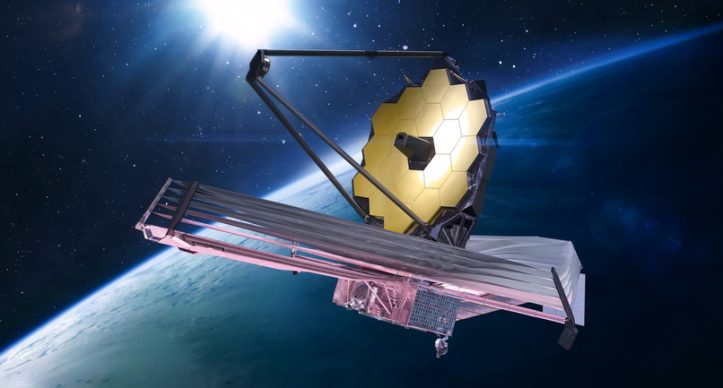
James Webb Telescope Just Rewrote What We Know About Ancient Galaxies
The James Webb Space Telescope (JWST) has made another discovery that’s reshaping how astronomers understand the early universe: previously hidden stars within some of the oldest known galaxies, revealing that these ancient galaxies are significantly larger than scientists had estimated, per reporting this week.
Why older telescopes missed this
Earlier space telescopes, including Hubble, weren’t sensitive enough to detect the faintest, most distant starlight buried within these ancient galaxies. JWST’s infrared instruments are specifically designed to see through cosmic dust and capture extremely faint, redshifted light from the early universe, light that has been traveling toward us for over 13 billion years. That extra sensitivity is what allowed astronomers to spot stars that had essentially been hiding in plain sight.
What “bigger than we thought” actually means
When astronomers say these galaxies are larger than previously understood, they mean the newly detected stars add significantly to the galaxies’ total mass and stellar population. That changes scientific models of how quickly galaxies formed and grew in the early universe, a timeline that’s already been repeatedly revised since JWST launched, as it keeps finding galaxies that appear more developed, earlier, than older theories predicted.
Why this keeps happening with JWST
This isn’t the first time JWST has forced scientists to rewrite the early-universe timeline, and it likely won’t be the last. Each new discovery adds pressure on existing models of galaxy formation, some of which were built primarily on Hubble-era data that simply couldn’t see this deep into cosmic history.
The takeaway for readers
You don’t need a background in astrophysics to appreciate the pattern here: our most powerful telescope keeps finding the universe to be more complex, more populated, and further along in its development at earlier points in time than anyone expected.