
National Guard Withdraws from New Orleans: What It Means for Public Safety and Criminal Justice
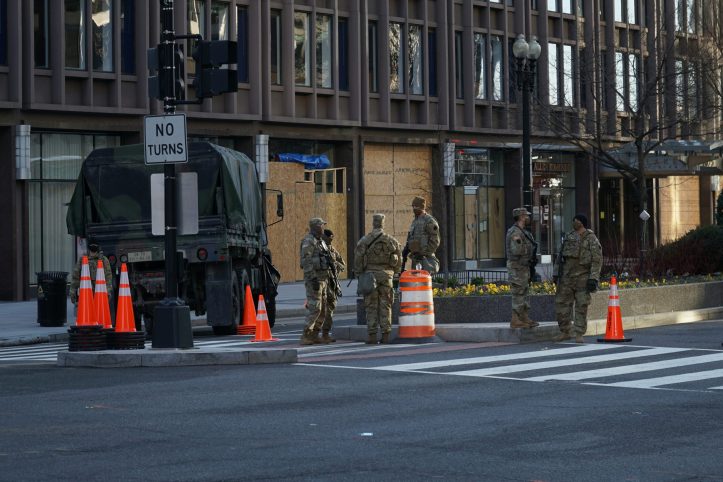
After roughly two months of heightened federal and state coordination, the Louisiana National Guard is officially withdrawing from New Orleans, marking the end of a visible chapter in the city’s latest public-safety surge.
The deployment — part of a broader coordinated effort known as Operation NOLA Safe — brought uniformed Guard members into the city to support law enforcement logistics, intelligence operations, and strategic crime-reduction initiatives. Now, with the Guard stepping back, attention turns to what happens next.
For a city long defined by resilience — and just as often by headlines — this moment is more than procedural. It signals a pivot in how New Orleans balances crime enforcement, civil liberties, and long-term public safety reform.
Why the National Guard Was Deployed
Governor Jeff Landry first requested the deployment in September 2025, citing violent crime, drug trafficking, illegal firearms, and repeat offenders as primary concerns. The Trump administration subsequently authorized 350 Louisiana National Guard soldiers to deploy under federal Title 32 status — meaning troops remained under Governor Landry’s command while the federal government covered costs.
Rather than traditional street-level patrol in combat posture, Guard members primarily functioned as a force multiplier enabling law enforcement officers to make arrests, according to the Louisiana National Guard’s own statements. Their roles included intelligence analysis, surveillance coordination, logistical reinforcement, and high-visibility presence in the French Quarter Enhanced Security Zone — particularly during New Year’s Eve, the Sugar Bowl, and Mardi Gras.
What Did the Deployment Actually Accomplish?
By mid-February, Operation NOLA Safe had recorded 175 arrests, the removal of more than 100 firearms, the seizure of 20 kilograms of cocaine, and the rescue of four human trafficking victims, according to a Defense Visual Information Distribution Service report citing official press conference figures.
More than 350 Guardsmen conducted roving patrols, manned checkpoints, and maintained continuous 24-hour security during peak Mardi Gras operations, working 12-hour shifts alongside Louisiana State Police and partner agencies.
The broader crime picture also offers context: violent crime in New Orleans declined for a third consecutive year in 2025, according to NOPD officials — a trend that predates and runs parallel to the Guard deployment.
The Political and Legal Backdrop
The deployment was not without debate. NOPD Superintendent Anne Kirkpatrick welcomed the assistance of law enforcement partners, noting the Guard “provided valuable public safety volume and visibility.” Mayor Helena Moreno struck a more measured tone, stating the Guard is most useful “for deployment during Mardi Gras or other large-scale events.”
Critics raised persistent questions about whether military presence risks blurring the line between civilian policing and state force — and whether short-term deployments meaningfully address root causes of crime. Supporters countered that the Guard increased visible deterrence and helped accelerate multi-agency investigations without overextending NOPD.
Operation NOLA Safe itself was co-led by Homeland Security Investigations and the FBI, with NOPD, State Police, ATF, DEA, National Guard, and others as partners — a structure that remains in place even after the Guard’s departure.
What Changes Now?
The withdrawal does not mean enforcement activity is slowing. Federal task force coordination through Operation NOLA Safe continues, with HSI and the FBI maintaining operational leadership. The key shift is the removal of National Guard logistical support and street-level presence.
From a criminal justice standpoint, this period of intensified multi-agency enforcement could shape the next wave of cases moving through the courts. Operations of this kind routinely generate federal gun charges, drug conspiracy indictments, and RICO-style investigations. Defense attorneys in Orleans Parish are already navigating cases that stem from coordinated enforcement sweeps and will likely scrutinize arrest procedures, inter-agency evidence sharing, Fourth Amendment implications, and chain-of-custody processes as those matters develop.
A Broader Question: Temporary Fix or Structural Shift?
Deploying the National Guard in American cities is not unprecedented — similar deployments have taken place in Portland, Memphis, and Washington, D.C. in recent years. But the same question always follows: is this a short-term stabilization tool, or part of a broader recalibration of urban policing?
Military support can assist operationally, but it does not directly address systemic factors such as housing instability, education disparities, economic inequality, or gun accessibility — challenges that compound crime trends in cities like New Orleans regardless of enforcement posture.
City officials now emphasize sustained strategy over emergency posture. Whether the crime reductions achieved during the surge hold without National Guard involvement will be closely watched in the months ahead.
The Bottom Line
The National Guard’s withdrawal from New Orleans does not signal retreat — it signals recalibration. The city moves forward relying primarily on local law enforcement, federal task forces, and prosecutorial strategy to sustain the progress made during the deployment. If you are in need of criminal defense, New Orleans criminal defense lawyers are a good place to start.
As always, the real test will come not in the weeks immediately following the withdrawal, but in the longer arc of crime data, court outcomes, and public trust that follows. New Orleans returns to its familiar rhythm — still watched, still studied, still striving for balance between safety and civil liberty.