
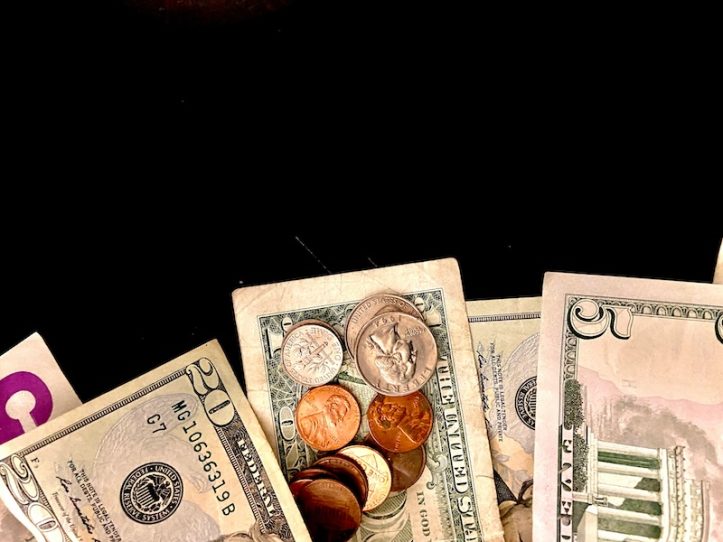
The Human Side of Economic Data: Real Families Behind the Numbers
The economy is doing well. GDP is growing. Unemployment is holding steady at 4.3%. Wages have technically outpaced inflation. The stock market has hit record highs.
These are the numbers. They are accurate. They are also, for millions of American families, almost completely disconnected from the reality of what it feels like to pay rent, buy groceries, and try to stay financially afloat in 2026.
That gap — between what the data says and what life actually costs — is the most important economic story of this moment, and it’s one that gets lost when news coverage leads with headline GDP and closes with unemployment percentages. Behind every aggregate figure is a distribution. Behind that distribution are people. What happens when we look at who those people actually are?
Key Takeaways
- Despite nominal wage growth of 3.5% outpacing a 3.3% inflation rate, consumer sentiment hit a record low of 49.8 in April 2026 — the lowest reading in the University of Michigan survey’s 74-year history.
- The Federal Reserve’s 2025 household survey found that only 63% of U.S. adults could cover a $400 emergency expense using cash — a figure essentially unchanged since 2022.
- Nearly half of all U.S. renter households — 22.7 million families — are now classified as cost-burdened, spending more than 30% of their income on housing.
- The “Housing Wage” — what a full-time worker must earn to afford a modest two-bedroom apartment — is $33.63 an hour, more than four times the federal minimum wage.
- The U.S. economy has settled into what economists call a “K-shaped recovery“: higher-income households are thriving on rising asset values, while lower-income families face structural disadvantages that GDP growth doesn’t touch.
- Low-income households have consistently faced higher inflation than high-income ones since late 2022 — meaning the same inflation rate lands very differently depending on where you sit in the income distribution.
The Problem With Averages
When economists report that wages have outpaced inflation, they mean something true and something narrow at the same time. The aggregate is accurate. The experience it describes is not universal.
Research from the Federal Reserve Bank of Cleveland found that after inflation peaked in June 2022, households in the bottom 40% of the income distribution consistently experienced both higher inflation and higher wage growth than those in the top 20%. The cumulative picture through 2024: the bottom and middle 40% ended up roughly 4.5 percentage points ahead in purchasing power since January 2019. The top 20% gained about 3.5 percentage points.
That sounds like good news for lower earners. Except the spending weight matters. Lower-income households spend a disproportionate share of their budgets on necessities — food, rent, energy, transportation — precisely the categories where price increases have been sharpest and most persistent. Wage gains that look competitive in the aggregate often don’t cover the actual cost increase in the things that can’t be cut.
As USAFacts reports, housing alone accounted for 1.5 percentage points of the 3.3% inflation rate as of March 2026 — roughly half the total. For a renter in a major metro area, that’s not a macroeconomic figure. It’s a rent increase that arrived in the mail.
What the $400 Question Tells Us
Every year, the Federal Reserve asks Americans a deceptively simple question: if you faced an unexpected $400 expense, could you cover it using cash or its equivalent?
The answer reveals something that GDP cannot: the real buffer — or lack of it — between families and financial emergency. A $400 car repair. A medical co-pay. A broken appliance. These are the costs that don’t make it into inflation reports but routinely derail household budgets.
The Fed’s 2025 Survey of Household Economics and Decisionmaking found that 63% of U.S. adults could cover that $400 using cash or savings — a number unchanged since 2022. The other 37% would need to borrow, sell something, or simply couldn’t cover it at all. In a country with a $24 trillion GDP, more than one in three adults are one unexpected expense away from financial stress.
The same survey found that 91% of U.S. adults cited price increases as either a major or minor financial concern, with 53% calling them a “major concern.” The share who reported being “worse off financially than a year ago” stood at 29% in 2024 — down from the series high of 35% in 2022, but still far above where it stood before the pandemic-era inflation surge. Financial well-being overall sits below the 78% high recorded in 2021 and has not recovered.
These aren’t dramatic numbers in isolation. But context transforms them. In 2019, 50% of Americans rated the national economy as “good” or “excellent.” By 2024, even as GDP growth was healthy, only 29% did. Something has happened to the relationship between what the economy is doing and what families believe it is doing for them.
The Housing Wall
No single data point does more to explain the gap between economic optimism and household pessimism than the current state of housing.
Home prices are up 60% nationwide since 2019 and are still rising at a rate of 3.9% year over year. High home prices combined with persistently elevated mortgage rates have pushed home sales to their lowest level in 30 years, according to Harvard’s Joint Center for Housing Studies. The effect is a frozen housing ladder: existing homeowners can’t afford to sell and buy something else at current rates, so inventory stays low, prices stay high, and first-time buyers can’t get in.
For renters, the picture is more acute. The number of cost-burdened renter households hit a record high of 22.7 million in 2024 — nearly half of all renters in the country. “Cost-burdened” means spending more than 30% of income on housing, which financial planners have long treated as the threshold above which families face genuine tradeoffs between housing and other necessities. More than 12 million households are severely cost-burdened, spending more than 50% of their income on rent and utilities.
The National Low Income Housing Coalition’s 2025 Out of Reach report puts a number to the underlying structural problem: the “Housing Wage” — the hourly rate a full-time worker must earn to afford a modest two-bedroom apartment without exceeding that 30% threshold — is $33.63. The federal minimum wage is $7.25. Of the 25 most common jobs in the United States, 18 pay median wages that fall below the Housing Wage for a two-bedroom rental. Those 18 occupations employ approximately 74 million people — nearly half the entire U.S. workforce.
Wages rising 3.5% in a year mean very little when you need to earn $33.63 an hour to keep your housing costs in range and you’re making $15.
The K-Shaped Economy in Practice
Economists have settled on a useful image for the economic divide that has widened through and after the pandemic: the letter K. The upper arm of the K represents higher-income households, whose recovery has been strong — rising asset values, appreciating home equity, robust stock market gains, remote-work flexibility. The lower arm represents everyone else, for whom the “recovery” looks more like prolonged strain.
U.S. Bank’s January 2026 economic analysis describes the pattern clearly: the K-shaped economy “reflects a long-standing divergence where wealthier households benefit from asset appreciation, better schools and technology, while lower-income families face structural disadvantages and financial strain.” Pandemic-era policies temporarily narrowed the gap — stimulus checks, expanded tax credits, enhanced unemployment benefits — but that compression quickly reversed as capital income surged and inflation eroded real wages.
The K shows up concretely in spending data. In late 2025, top-income households boosted their spending by 4%, while the bottom third barely increased. It shows up in the stock market: the S&P 500 recently touched 7,400, but equity ownership is heavily concentrated among higher-income households, meaning stock market gains flow disproportionately to those already at the top. It shows up in the New York Fed’s analysis showing that since 2023, higher-income groups have experienced higher cumulative wealth growth than lower-income groups — in both net worth and real spending.
Fortune’s reporting in May 2026 captured the divide through one economist’s observation: Disney’s domestic park bookings and cruise reservations remained strong through the second half of 2026 — “that’s the $150,000-and-above crowd,” as economist Heather Long put it. For the bottom half of the income distribution, the picture is different: more applications for personal loans, more reliance on credit cards, more living paycheck to paycheck in the most literal sense.
The Vibecession Isn’t a Mood Problem
When consumer sentiment measures hit record lows in April 2026 — the University of Michigan’s reading of 49.8 was the lowest in the survey’s 74-year history — some economists dismissed it as a “vibecession”: a gap between how people feel and what the data actually shows. The dismissal misses the point.
The term “vibecession” was coined by economic commentator Kyla Scanlon to describe the disconnect between healthy-looking headline data and genuine public pessimism. But as economists have increasingly recognized, the “vibes” now have real economic consequences. “Unlike a few years ago, the ‘vibes’ now stand to have a greater impact on behavior, and thus the health of the economy,” NerdWallet senior economist Elizabeth Renter wrote in mid-2025. When sentiment falls far enough, spending contracts — and then the pessimism becomes self-reinforcing.
More fundamentally, the framing of “bad vibes despite good data” assumes the data captures what most families are experiencing. It doesn’t. Prices remain dramatically higher than they were before the pandemic, even when the rate of inflation has cooled. A 3.3% inflation rate on prices that are already 24% above 2020 levels is not the same as 3.3% in a stable price environment. As GovFacts analysis put it: “the lingering sticker shock of a 24% rise in price levels since 2020” has severed the link between economic output and how secure families feel about their finances.
Families aren’t misreading the economy. They’re reading a different part of it than the headlines are.
Who Carries the Weight
The aggregate numbers also obscure profound differences in who bears what burden.
The housing cost crisis is not equally distributed. Renter households of color are more cost-burdened than white renters. According to the National Low Income Housing Coalition’s 2026 data, 18% of Black non-Latino households, 16% of American Indian and Alaska Native households, and 13% of Latino households are extremely low-income renters — compared to just 6% of white households. Seventy-four percent of the nation’s extremely low-income renter households are severely cost-burdened, spending more than half their income on rent and utilities.
Income variability compounds the pressure. The Federal Reserve’s 2024 household survey found that 11% of adults struggled to pay their bills in the prior 12 months because their income varied from month to month. For households earning under $25,000, that share rose to 19%. For households earning $100,000 or more, it was 3%. The same volatile income that looks like “flexibility” in gig economy coverage creates genuine hardship when the bills are fixed and the paycheck is not.
Parents have fared particularly poorly. After rising sharply in 2021, the share of parents reporting that they were doing okay or living comfortably financially has fallen 10 percentage points since that time — and the gap between parents’ financial well-being and that of non-parents has notably widened. Young adults between 18 and 29 report doing okay or living comfortably at a rate of 66%, compared to 84% of adults 60 and over. The economy looks very different depending on when you entered the housing market, whether you own stocks, and whether you’re supporting children.
Reading the Numbers Differently
None of this is an argument that economic data is useless. GDP, unemployment, wage growth, and inflation measures are real and important signals. The problem isn’t the data itself — it’s what gets reported from it and who gets left in the aggregate.
As UCLA Anderson Forecast senior economist Clement Bohr observed, consumer spending by high-income households contributed significantly to the steep increase in GDP — creating “an incomplete portrait of consumer spending by middle- and low-income households.” A GDP figure that is being driven by Disney cruises and luxury goods is technically the same number as one driven by broad consumer health. But the families behind those two economies are living very different lives.
The Federal Reserve has recognized this. The SHED survey exists precisely because, as Fed Governor Michael Barr has noted, “it’s critical for the Federal Reserve to understand the economic experiences of families and communities” — not just the aggregate. What they’ve found is that stability in headline numbers has coexisted with persistent fragility at the household level, and that fragility is not evenly distributed.
Understanding that gap — between what the data reports and what families live — is not an exercise in pessimism. It’s the starting point for any honest conversation about what kind of economy is actually being built, and for whom. The numbers matter. So do the people behind them.